


New Delhi|7thDecembe2025:
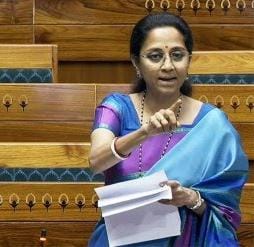
A new private member’s bill introduced in the Lok Sabha seeks to give India’s workforce a long-awaited right — the right to disconnect from work once office hours end. The Right to Disconnect Bill, 2025, introduced by MP Supriya Sule, aims to legally restrict employers from calling, emailing, or sending work-related messages to employees after official working hours.
According to the Bill, organisations will be prohibited from compelling staff to respond to digital communication beyond work timings or on holidays. Any violation could attract a penalty of 1% of the total remuneration paid to the organisation’s employees, making it one of the strictest workplace-boundary laws proposed in the country.
The proposed law also requires companies to create clear policies defining work limits, overtime guidelines, and communication protocols. If an employee voluntarily agrees to work after hours, they must be compensated at standard overtime wage rates.
The Bill argues that constant connectivity through smartphones & remote working culture has blurred the boundaries between professional and personal life. This “always-on” digital pressure, it says, leads to stress, sleep deprivation, emotional exhaustion, and what it calls “info-obesity”. To address these issues, the Bill also proposes establishing an Employees’ Welfare Authority, along with digital detox centres and counselling services, to support mental well-being.
Supporters believe the legislation would help protect work-life balance and prevent burnout. However, as a private member’s bill, its passage remains uncertain — historically, such bills rarely become law. Even so, the introduction of the Bill has sparked nationwide debate about workplace culture, especially in sectors where employees remain connected to global teams across time zones.
If the Bill progresses, India may join countries like France, Italy, and the Philippines, which already recognise the right to disconnect as part of labour rights.
The proposal has triggered strong discussions across corporate circles, with many employees welcoming the move while industries argue that flexibility & sector-specific demands must also be considered.
- The Bill will now await further debate

 & consideration in Parliament.

