


Amit Roy
Delhi|1st February 2026:
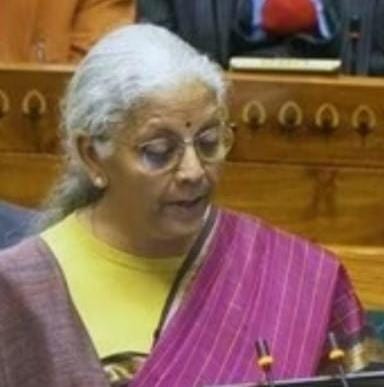
India’s Union Budget is an annual financial statement that outlines the government’s income, expenditure, taxation, investment plans for the upcoming financial year. Today (On 1st February 2026,) Union Finance Minister Nirmala Sitharaman presented her 9th consecutive budget for the 2026–27 financial year in the Parliament.
The 2026–27 Union Budget is not just an exercise in accounting, it serves as a policy roadmap for India’s future development. Positive reforms in taxation, agriculture, healthcare, education & technology-driven sectors are expected to be the key highlights, aimed at improving the quality of life of ordinary citizens.
Key Announcements:
Prices to come down for solar power equipment, footwear, microwave ovens.
Import duty reduced on 17 cancer medicines & diabetes medicines, making them more affordable.
Foreign travel to become cheaper:
TCS (Tax Collected at Source) reduced from 5%, lowering expenses for overseas travel and foreign education.
Further simplification of the income tax structure proposed.
Relief for small tax defaults:
For minor tax evasion, penalty instead of punishment.
In cases of small tax evasion, no jail term; release possible by paying an additional 10% penalty.
100% penalty announced for tax evasion, as declared by Finance Minister Nirmala Sitharaman.
Announcement to set up “NIMHANS-2” institutes in Ranchi and Tezpur.
The Union Budget places special emphasis on mental health.
New Income Tax Act to come into effect from 1 April 2026.
Compensation received will be exempt from income tax.
Deadline for filing revised Income Tax Returns extended:
Returns can now be revised with a nominal penalty up to 31 March (earlier deadline was 31 December).

